Traçar moldes com margens de costura incluídos - Tracing patterns adding seam allowances

Português
English (uncheck the other box and check this one)
É algo que se pode fazer quando se tem confiança que o molde assenta bem ou quando o molde é tão simples que não será necessário ajustá-lo. Depois de copiar o molde em papel vegetal basta acrescentar as margens necessárias (eu costumo acrescentar 4cm nas bainhas e 1,5cm nas restantes margens). Para desenhar as margens de 1,5cm podem usar um compasso regulado com a medida correspondente, passando-o ao longo das linhas do molde de forma que a parte do lápis desenha um a orla em redor do molde.


Para cortar estou a usar uma lâmina rotativa e uma base de corte especial, que não estraga a lâmina nem fica cortada. Este equipamento não é barato mas justifica-se se costurarem bastante, pois evita lesões nas articulações provocadas pela utilização continuada da tesoura. As peças do molde são colocadas sobre o tecido dobrado ao meio no sentido do comprimento e podem segurar-se com pequenos pesos ou alfinetes, como fiz aqui. Se usarem alfinetes, tenham cuidado pois podem distorcer o tecido. É melhor fixarem primeiro um alfinete em cada topo da peça e seguidamente um em cada extremo lateral, e só depois preencher as orlas com alfinetes suficientes (espaçados cerca de 10-15cm).

Não se esqueçam de guardar alguns retalhos que sobram do corte, pois são necessários para testar os pontos da máquina de coser, as entretelas, e para fazer as casas avivadas.

Em seguida vou colar as entretelas e reforços (fazendo alguns testes nos retalhos primeiro), marcar as linhas relevantes com alinhavos (pinças, linhas de sobreposição, etc.), preparar o molde para cortar o forro e cortar o forro. Em relação ao forro fiz um teste com o cetim estampado e parece-me que o pique branco deixa transparecer o motivo estampado para fora… Vou ter de alterar os meus planos mais uma vez. Até à próxima!

This is something that you can do if you have confidence in the pattern used (and the pattern doesn’t include SAs, like BurdaStyle or Patrones patterns) or when the pattern is so simple and or loose fitting that we can assume that it won’t need tweaking to fit properly. After tracing the pattern on paper, just add the necessary seam allowances and hem allowances. You can use a compass to trace the outlines, it’s pretty easy and it saves some time.


I’m using a rotary cutter and a self-healing mat, which are good investments if you sew a lot. I don’t use this method for every fabric but it’s perfect for the cotton pique. The rotary cutter also prevents joint lesions caused by the repetitive usage of scissors. The patterns can be hold in place by some weights or they can be pinned; this last case requires some practice avoiding fabric distortion; first set the upper and lower extremes of the pattern and then both sides, using one pin for each end; then pin around the piece, more or less 4 inches apart. If the extremes are secured first, with the fabric and pattern flat, the distortion will be minimized when pinning around the paper pattern.

Don’t forget to save some scraps because you’ll need them for testing the machine stitches, the interfacings and for making the bound buttonholes.

OK, the fabric is cut and next I will cut and fuse the interfacings and reinforcements (testing on scraps first), thread trace the relevant markings (notches, darts, etc.), prepare the pattern for cutting the lining and cut the lining. Speaking of the lining, I tested the printed fabric against the white pique and there seems to be some see through. I might have to change my plan once again… See you next time!

Notícias excitantes - Exciting news

Português
English (uncheck the other box and check this one)
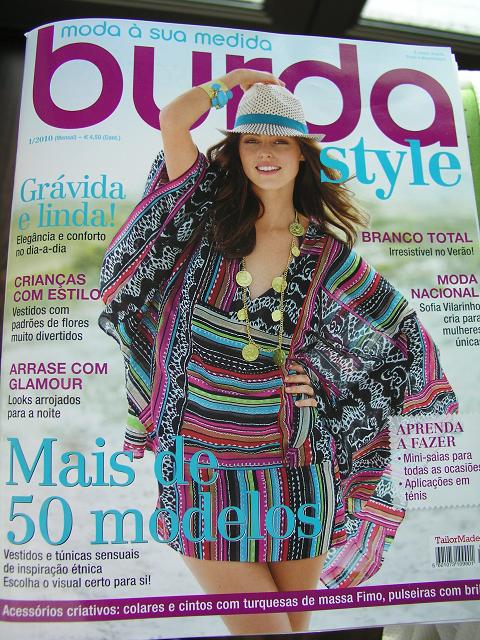
Já todas(os) devem saber que este mês saiu a Burda Style editada em Português… É uma iniciativa que saúdo e acarinho pois tenho a certeza que contribuirá para que o hobby de costurar seja mais facilmente difundido e aperfeiçoado pela comunidade de expressão Portuguesa em todo o mundo!

A editora da Burda contactou-me com um pedido muito especial antes do lançamento; pediram-me que escrevesse um pouco sobre a minha história e o papel da Burda na minha contínua aprendizagem desta arte. Nesta primeira edição da Burda Style em Português podem encontrar um artigo que escrevi a contar a história de como tudo começou para mim e como a Burda esteve lá no início e ao longo do meu percurso:

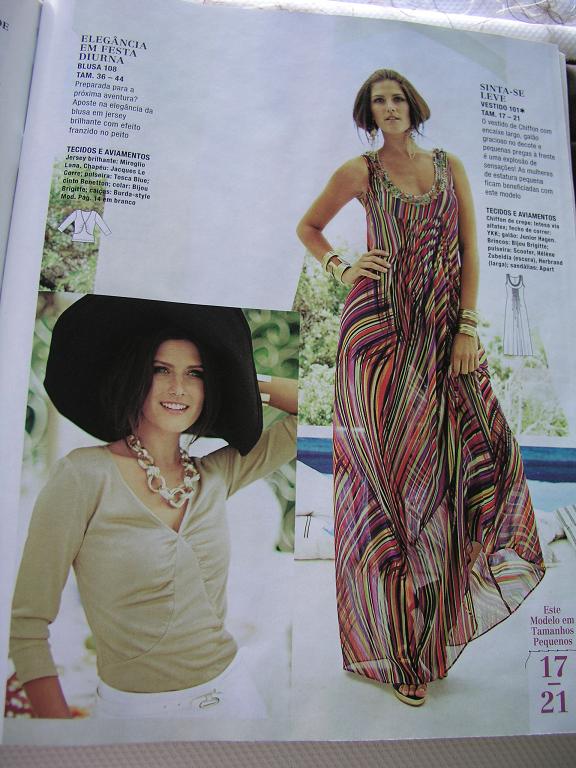
Este número traz modelos muito bonitos, dos quais mostro alguns exemplos:

Espero fazer o colete em breve e também gostei muito das calças, aliás acho que fato completo está o máximo.

Outro modelo que me chamou à atenção foi estes calções, que poderiam ser confeccionados em napa ou cabedal fino (um estilo presente em alguns dos desfiles actuais).


E não podiam faltar os maxi-vestidos flutuantes e românticos, outra tendência desta primavera/verão!

Quanto às minhas actividades de costura correntes, estou um pouco parada por motivos diversos; decidi mudar o tecido do projecto em curso e depois de ter pensado em várias alternativas decidi-me por um piquê branco e cetim estampado para o forro… Já tenho o molde traçado e falta-me apenas tempo para por mãos à obra!

Desejos a todos de uma óptima semana de costura!

You must already know that this month the Portuguese Burda Style was released… I salute and cherish this initiative because I think that it will enable the Portuguese speaking community all over the world to get access to a multitude of sewing info in their native speaking language, thus spreading the scope of the sewing art knowledge.

The editors of the Portuguese Burda Style contacted me a few months ago asking for my collaboration, in terms of an article stating my early sewing path and how Burda played (and still plays) an important role in my sewing education. Here’s the article (sorry, no English translation at this point; basically I explain how a neighbor dressmaker aided me along my first steps operating a sewing machine and how her work and extensive Burda collection inspired me to start sewing my clothes):

This issue features a lot of interesting patterns, here’re a few examples:

I plan on making this vest soon, using some printed sequined fabric from my stash. In fact I love the entire outfit and might make the trousers too.

Another model that caught my eye was these shorts; they can be made up of leather or leather-like fabric, for achieving a very trendy piece (leather shorts are a strong trend for spring this year).


And, of course, there are also flowy and romantic maxi-dresses!

As for my current sewing activities, I went through some lack of sewing mojo (and lack of time too) but I plan on being back on the saddle soon. There was a change of plans concerning my current project: I decided to use another fabric for the coat and the lining and after debating a little on what fabric to use, I ended up choosing this white cotton pique and the printed satin for the lining. Now all I need is some time to get the coat done!

Wishing you all a wonderful sewing week!

Biblioteca de costura - Sewing library

Português
English (uncheck the other box and check this one)
Pensei que gostariam de ver alguns dos meus livros de costura (e assuntos relacionados):


I thought it would be nice to share some of my sewing library:


O projecto seguinte em planeamento – Next project in the planning

Português
English (uncheck the other box and check this one)
É um meio-termo entre uma gabardina e um casaco estilo militar; o molde é da revista Patrones nº289 (Fevereiro de 2010), modelo #40. Aperta com trespasse, tem gola “Mao” y mangas de alfaiate (duas peças) a 3/4.


Para a confecção escolhi uma sarja fina em tom bege areia e botões de latão em forma de bola (ultimamente não me consigo cansar deles)

Tenho que traçar o molde na medida 42; na revista são fornecidos os tamanhos 40-44-48, pelo que terei de usar o método que expliquei aqui para traçar o molde intermédio. Até à próxima!

It’s halfway between a trench coat and a military coat; the pattern is from the February 2010 Patrones magazine (nº289, model #40). It features a double breasted coat with a “Mao” collar and two-piece 3/4 sleeves.


I’ll be using sand colored cotton fabric and half-ball brass buttons (I can’t get enough of them).

The pattern sizing in this magazine is 40-44-48; being a patrones size 42, I’ll have to trace a “in between” size, as explained in this post. See you next time around!

Vestido de trespasse preto - Black wrap-over dress

Português
English (uncheck the other box and check this one)

Aqui está um estilo que na minha opinião está sempre na moda. Fiz este vestido durante a minha ausência do blogue, aproveitando o pouco tempo disponível que tinha.

Modelo: Burda de Setembro de 2006, #114

Descrição: Vestido de trespasse cintado com cinto de atar, tem gola camiseiro, presilhas nos ombros, bolsos falsos com paleta, e mangas a três quartos com presilhas. Foi confeccionado o tamanho 38, sem alterações.

Tecido e materiais: cerca de 2,3m de tecido de malha estável preto, botões metálicos em forma de meia bola, linhas à cor e entretela termo-colante de malha fina. Este tecido é óptimo de trabalhar pois não necessita de remate nas orlas (não desfia nem ganha malhas), além de ser um pouco elástico permitindo que o vestido se ajuste ao corpo.

O modelo é fácil de confeccionar e resulta muito bem. A seguir podem ver alguns detalhes:

A manga:

As paletas dos bolsos falsos:

As presilhas dos ombros:

(NOTA: as fotos foram aclaradas para permitir distinguir os detalhes)

Conclusão: sucesso garantido com este vestido que favorece qualquer figura! Em breve poderão ver-me a usá-lo no meu outro blog! Até à próxima e obrigada pelo vosso apoio!


Here’s a dress style that in my opinion is never out. I made this dress during my blog hiatus, using the little free time I had available.

Original model: September 2006 BWOF, #114

Description: Wrap-over dress with tying belt, features a shirt collar, shoulder tabs, faux flap pockets and three quarter roll-up sleeves with tabs. I cut a 38 European size with no alterations.

Fabric and notions: About 2.5 yards of stable knit (lightweight double knit?), half-ball metal buttons, thin knit fusible interfacing and matching sewing thread. This a great fabric to sew with, because you don’t have to serge-finish the seam allowances. It has just the right amount of elasticity so the dress hugs the body in a flattering way.

This dress is so easy to make and works out wonderfully. Here are a few detail shots:

The sleeve:

The chest flaps (faux pockets):

The shoulder tabs:

(NOTE: the pictures were brightened to enhance the details)

Conclusion: This dress is a winner! It flatters most figure types and it’s classy and elegant. Soon you’ll watch me wearing it over at my other blog! Thank you so much for stopping by!

O novo blogue já está activo! - New blog is up!

De volta (ou quase)! - (nearly) Back !

Português
English (uncheck the other box and check this one)


Sim, é a minha nova sala de costura, embora ainda faltem umas coisinhas aqui e ali, hehehehe!
Praticamente já a viver na nova casa, Internet instalada e a funcionar (depois de muitas voltas!), sala da costura quase toda organizada e arrumada, sinto-me “quase” pronta a retomar a programação normal deste blogue (o “quase” deve-se essencialmente à trabalheira do que falta ainda organizar na nova casa, limpar e colocar tudo no devido sítio, além da manutenção: limpar uma casa de duas assoalhadas mais terraço, 3 casas de banho, 3 quartos, um salão e uma cozinha, para além do quintal e do “futuro” relvado, não se compara à manutenção de um pequeno apartamento de 60m2 com uma sala com balcão/cozinha, um quarto, um WC e uma varanda!).
À partida o plano é retomar o Couture et Tricot centrado na confecção das roupas/acessórios que vou fazendo e um outro blogue em paralelo mais focado no meu estilo pessoal e guarda-roupa. Este novo blogue será mais visual (menos conversa e mais fotos) e terá moderação de comentários (depois de uma fase inicial talvez deixe de ser público e passe a ser acessível apenas por subscrição, ainda estou a ponderar esta questão) além de algumas regras; por exemplo não divulgarei a marca comercial da roupa/acessórios a não ser que sejam da minha autoria, da autoria de amigos meus (não se enquadram na categoria de marca comercial) ou que a referida marca me patrocine. Se desejarem saber a origem de determinada peça, apenas fornecerei essa informação a título particular (via email).

Outra notícia importante que tenho para vocês (principalmente para as leitoras de expressão Portuguesa), é que a revista Burda será relançada em Português (a partir de 15 de Maio), e disponibilizada para venda em Portugal, Brazil, Angola e Moçambique! Podem ler a press release aqui e se quiserem podem tornar-se fans da Burdastyle portuguesa no Facebook! Bora lá apoiar a nossa causa!

Espero que partilhem o meu entusiasmo! Mal retome as costuras e comece o novo blogue eu aviso (espero que seja muito em breve)! Até lá, fiquem bem!


Yes you guessed right, this is my new sewing room, though it’s not quite yet finished and fully operational, lol!
I’m practically settled in the new house, the Internet is on (after going through a few setbacks with the initial installation: I had no internet at the time I moved in but now it seems to be running fine), and the sewing room is furnished so I’m “almost“ ready to get back to Couture et Tricot’s regular blogging schedule (the “almost“ is due to the the extra workload of settling in the new house, cleaning and placing everything in place, besides maintaining the house neat and clean: let’s just say that a house with 3 bedrooms, a big kitchen, a sewing room, three bathrooms, several balconies, a dining/living room, a rooftop terrace, backyard, etc. it’s not exactly same as maintaining and cleaning a small apartment…).
So the plan is to resume Couture et Tricot focusing on my craft projects on the making; I’m also planning on starting yet another blog, more focused on my personal style, daily outfits, etc. It will be a “visual blog” (less talk, more pictures) and it will have a different set of rules; due to its personal nature I plan on moderating all the comments and after an initial trial phase, it might become accessible by subscription only (I’m still pondering on this matter). I will not mention any commercial brands unless they sponsor me (the exceptions are of course garments that I made or were made by friends of mine, not belonging to the category of commercial brands). If someone wishes to know the origin of a particular “no named brand” item, I’ll be happy to provide that information by private email, if I can.

I’d like to share some important news for the Portuguese speaking readers: the Burda magazine will be reedited in Portuguese and available in Portugal, Brazil, Angola and Mozambique, YAY! Here’s the Facebook’s webpage if you wish to support it and become a fan!

I hope you share my enthusiasm and I promise to come back as soon as I’m able to start sewing again! I'll let you guys know when the new blog is up (soon, I hope)! Big hugs to all, I missed you a lot!